|
restoring our biblical and constitutional foundations
|

The “Liberation” of New Orleans
Imagine a city undefended except for some armed civilians. At first the city refuses to surrender but eventually caves in as the enemy threatens to obliterate it by aerial bombardment. The good citizens of the municipality, upset that they had been betrayed, take to the streets in rage against the occupying forces. The enemy cracks down on the rioters in a series of savage attacks.
No, the city is not in modern Iraq. It is New Orleans, which surrendered to Federal forces on this day, April 28, in 1862. Its garrison troops being on duty elsewhere, the city was undefended. The Federals were led by Union Flag-Officer David G. Farragut, a former New Orleanian with an ax to grind. Being suspect because of his Southern roots, his capture of New Orleans was not only strategically important but personally critical.
 On
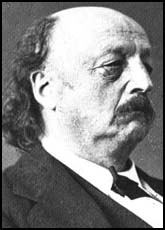
May 1, Union troops entered the city under the command of General Benjamin
Butler. The mood of the citizenry was defiant, and Butler, in an attempt
to squelch any opposition, cracked down on the citizens in a series of
abhorrent actions that earned him the nickname “The Beast.” A certain
William Mumford was immediately court-martialed and hanged for pulling
down a Yankee flag from the local mint. Keep in mind this was while the
city was still in Confederate hands! Until the surrender had been
accomplished, New Orleans remained under the authority of its own
municipal officers. Butler’s next move was to sentence a woman to two
years imprisonment on Ship Island for laughing during a Union funeral
procession. Similar “lessons” in civility followed. Soldiers ransacked
homes looking for weapons, and everyone over the age of 18 had to choose
between taking an oath of loyalty to the invading army and being exiled
from the city with the loss of all personal property.
On
May 1, Union troops entered the city under the command of General Benjamin
Butler. The mood of the citizenry was defiant, and Butler, in an attempt
to squelch any opposition, cracked down on the citizens in a series of
abhorrent actions that earned him the nickname “The Beast.” A certain
William Mumford was immediately court-martialed and hanged for pulling
down a Yankee flag from the local mint. Keep in mind this was while the
city was still in Confederate hands! Until the surrender had been
accomplished, New Orleans remained under the authority of its own
municipal officers. Butler’s next move was to sentence a woman to two
years imprisonment on Ship Island for laughing during a Union funeral
procession. Similar “lessons” in civility followed. Soldiers ransacked
homes looking for weapons, and everyone over the age of 18 had to choose
between taking an oath of loyalty to the invading army and being exiled
from the city with the loss of all personal property.
It was Butler’s “Woman’s Order,” however, that took the cake. The good ladies of New Orleans, utilizing every opportunity to show their contempt for the ruthless invaders, would dump their chamber pots over the heads of passing Union soldiers. Butler’s Order #28 stated that any woman who henceforth showed disrespect for the Federal forces would be considered “a woman of the town plying her trade”—in other words, would be used as a prostitute. The order had its intended effect: Keep silent on the streets or risk being raped by the Federals. Its issuance was an offense against every concept of decency and a crime against the womanhood of a city that was foremost in the land in rendering knightly reverence to the weaker sex.
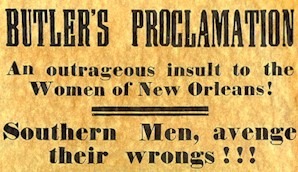
Butler’s outrageous behavior elicited the fury of the Confederate leadership. President Davis issued a death sentence for Butler, ordering him hanged if he were captured. When protests from European countries arrived in Washington, Butler was sacked and replaced by a more moderate occupying commander.
Up to Butler’s administration in New Orleans, the so-called “Civil War” was still relatively innocent in the meaning of outrages based upon malice. New Orleans was the first large city in the Confederacy to be placed at the mercy of a military dictator surrounded by his thugs.
A city, like a man, resents tyranny and is conciliated only by kindness. New Orleans chafed under the cruelty of the despot set over her. Her citizens could not fail to see it, nor could they ever forget it.
April 28, 2003
David Alan Black is the editor of www.daveblackonline.com.